The Functional Nutrition Approach to Performance: Fueling the Brain, Muscles, and Recovery
Crissy EasomShare
Athletic performance depends on more than a pre-workout rush. Hydration, electrolyte balance, cognitive readiness, amino acids, and consistent creatine intake can all support the systems athletes rely on before, during, and after training. Registered sports dietitian Jenna Stangland explains how these pieces fit together.
Performance nutrition has traditionally focused on carbohydrates, protein, and hydration—and for good reason. These fundamentals remain the foundation of athletic performance. But as our understanding of human physiology continues to evolve, we can also look at how specific functional nutrition compounds can support the systems that allow athletes to perform: the brain, nervous system, muscles, and recovery pathways.
The goal isn't simply to take more supplements. It's to strategically use evidence-informed compounds that complement a strong nutrition foundation and help the body and brain be prepared for the demands of performance.
Start With Hydration: The Brain and Muscles Need It
Hydration is one of the most overlooked components of performance readiness.
Water is essential for virtually every physiological process involved in exercise, including cardiovascular function, temperature regulation, muscle contraction, and nutrient transport. As body water decreases, plasma volume in the blood falls and the body's ability to regulate temperature can be affected, increasing cardiovascular and physiological strain during exercise. [1]
And hydration isn't just about your muscles.
The brain is highly sensitive to changes in hydration status. Research examining hypohydration has found that dehydration can negatively affect aspects of cognitive performance, particularly attention, executive function, and motor coordination, although the magnitude of the effect varies depending on the degree of dehydration, environmental conditions, exercise intensity, and the cognitive task being performed. [2]
For an athlete, this matters because performance isn't simply about how fast you can run or how much weight you can lift. It's also about making the right decision in a fraction of a second—recognizing an open teammate, tracking an opponent, reacting to a stimulus, or executing a skill under fatigue.
Hydration also needs to account for electrolytes, particularly sodium. Athletes can have dramatically different sweat rates and sodium concentrations. Research has documented exercise-related sodium losses ranging from approximately 200 mg to more than 7,000 mg per hour, demonstrating just how individualized electrolyte needs can be. [3]
That's why hydration should be more than simply drinking water. Sodium helps maintain fluid balance and supports normal nerve and muscle function. The right hydration strategy depends on the athlete, the environment, the duration and intensity of exercise, and individual sweat losses.
Hydration is the foundation for both physical and cognitive performance.
Getting "In the Zone": Supporting Focus and Cognitive Performance
Athletic performance isn't just physical. The brain is responsible for reaction time, decision-making, attention, anticipation, and maintaining focus when fatigue and pressure begin to build.
This is where functional compounds such as L-theanine and Lion's Mane become interesting.
L-theanine is an amino acid naturally found in tea that has been studied for its effects on attention, relaxation, and cognitive function. A dose of 200 mg of L-theanine has been used in controlled human research, including studies examining its combination with caffeine. Research suggests that the combination may support aspects of attention and reaction-time performance while promoting a more controlled state of alertness. [4]
For athletes, that distinction matters.
Being stimulated isn't necessarily the same as being focused.
The goal before competition isn't to feel jittery or overstimulated. It's to feel awake, composed, attentive, and ready to respond. L-theanine's role in a pre-performance formula is particularly interesting when paired with caffeine because the two compounds may complement one another—supporting alertness while helping create a smoother subjective experience.
Lion's Mane mushroom (Hericium erinaceus) is another functional ingredient receiving significant interest for its potential role in brain health and cognition. Human research is still developing, so it is important not to overstate the evidence. However, preliminary clinical research has investigated Lion's Mane for cognitive outcomes, making it an intriguing addition to a broader cognitive-support strategy. [5]
A 500 mg dose of Lion's Mane extract provides a targeted amount of this functional mushroom as part of ZentraZone's cognitive-support formula. Because Lion’s Mane research has used different preparations, extraction methods, and doses, the specific composition and standardization of an extract are important when interpreting the research. This is one reason continued research on the finished product is important. [6]
Together, these ingredients fit into an emerging approach to performance nutrition that recognizes that mental readiness is part of physical readiness.
Amino Acids: Preparing the Muscle Before Performance
When we think about amino acids, we often think about recovery nutrition. But amino acids can also play a role in the period leading into exercise.
Branched-chain amino acids (BCAAs)—leucine, isoleucine, and valine—are essential amino acids involved in muscle protein metabolism. Leucine is particularly important because it acts as a signaling molecule that helps activate the cellular pathways involved in muscle protein synthesis.
Think of leucine as part of the ignition system for muscle rebuilding. Having adequate leucine available helps signal the muscle that amino acids are present and that it is time to initiate the process of building and repairing proteins. Research suggests that approximately 2–3 g of leucine within a protein or EAA feeding can provide a meaningful stimulus for muscle protein synthesis, although the optimal amount varies based on the individual and the overall amino acid/protein source. [7]
This is an important distinction: BCAAs are not a replacement for complete dietary protein. Athletes who consistently consume adequate high-quality protein throughout the day are already providing their muscles with the amino acids needed for repair and adaptation.
The opportunity with a pre-performance formula is different: providing targeted amino acids as part of a broader performance-readiness strategy, while supporting the transition from performance into recovery.
And Where Does Creatine Fit In?
If there is one performance compound that has earned a permanent place in the sports nutrition conversation, it's creatine monohydrate.
Creatine increases the availability of phosphocreatine in muscle, which helps rapidly regenerate ATP (the body's immediate energy currency) during high-intensity exercise. This is particularly important during repeated bouts of explosive activity such as sprinting, jumping, accelerating, lifting, and repeated explosive efforts.8
But creatine's role extends beyond a single workout.
Consistent creatine supplementation has strong evidence supporting improvements in high-intensity exercise capacity, strength, and lean mass when combined with resistance training. [9] There is also growing interest in creatine’s role in cognitive and brain health. [8]
One important distinction: creatine isn't a traditional "pre-workout" ingredient that needs to produce an immediate sensation. Its benefits are primarily associated with consistent daily intake and muscle creatine saturation.
That makes it an excellent complement to acute pre-performance ingredients such as caffeine and L-theanine.
Bringing the Pieces Together
The most effective approach to performance nutrition isn't about finding one magic ingredient. It's about creating the right physiological environment for performance.
Hydration supports the brain, muscles, circulation, and thermoregulation.
Sodium helps replace an electrolyte that can be lost in substantial quantities through sweat.
L-theanine and caffeine can support alertness, attention, and a more controlled state of readiness.
Lion's Mane offers an emerging avenue for cognitive and neurological support.
Amino acids provide building blocks and signaling molecules involved in muscle protein metabolism and recovery.
Creatine supports the energy systems responsible for repeated high-intensity performance and provides benefits that extend beyond a single training session.
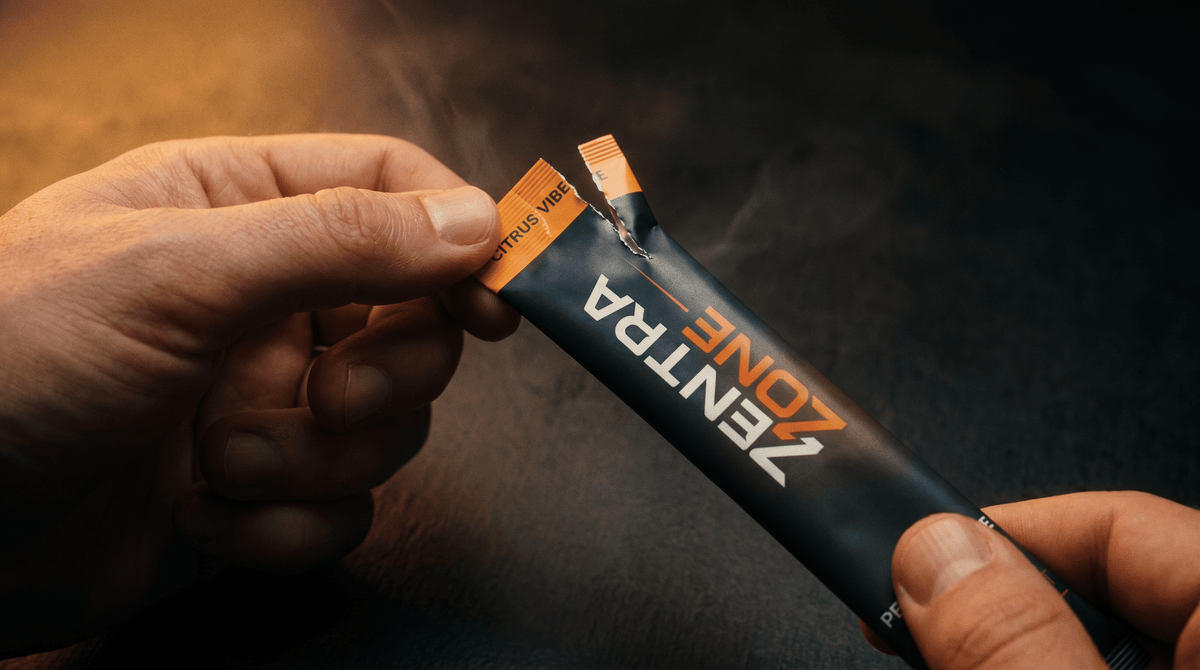
This is the concept behind ZentraZone: bringing multiple evidence-informed functional nutrition compounds together into a convenient, one-serving performance formula designed to support hydration, cognitive readiness, energy, and physical performance.
Rather than relying solely on stimulation, ZentraZone takes a more comprehensive approach—supporting both the brain and the body before performance.
For athletes, being ready to perform means more than having energy. It's being hydrated. It's being mentally engaged. It's having the physiological resources to execute. And it's having a nutrition strategy that supports not only what happens during performance, but also the recovery that follows.
Performance starts before the first whistle, puck drop, tip-off, or starting gun. The right functional nutrition strategy can help you prepare the systems that make performance possible.
Written by Jenna Stangland, MS, RDN, CSSD, LDN, CLT
ZentraZone’s Advisor for Scientific Affairs and Sports Nutrition
References
[1] Cheuvront SN, Kenefick RW. Dehydration: Physiology, Assessment, and Performance Effects. Comprehensive Physiology. 2014;4:257–285.
[2] Wittbrodt MT, Millard-Stafford M. Dehydration Impairs Cognitive Performance: A Meta-analysis. Medicine & Science in Sports & Exercise. 2018;50(11):2360–2368.
[3] McDermott BP, Anderson SA, Armstrong LE, et al. National Athletic Trainers’ Association Position Statement: Fluid Replacement for the Physically Active. Journal of Athletic Training. 2017;52(9):877–895.
[4] Kahathuduwa CN, Dassanayake TL, Amarakoon AMT, Weerasinghe VS. Acute effects of theanine, caffeine and theanine–caffeine combination on attention. Nutritional Neuroscience. 2017;20(6):369–377.
[5] Docherty S, Doughty FL, Smith EF. The Acute and Chronic Effects of Lion’s Mane Mushroom Supplementation on Cognitive Function, Stress and Mood in Young Adults. Nutrients. 2023;15(22):4842.
[6] Surendran G, et al. Acute effects of a standardised extract of Hericium erinaceus (Lion’s Mane mushroom) on cognition and mood in healthy younger adults. Frontiers in Nutrition. 2025;12:1405796.
[7] Anthony JC, Anthony TG, Kimball SR, Jefferson LS. Signaling pathways involved in translational control of protein synthesis in skeletal muscle by leucine. The Journal of Nutrition. 2001;131(3):856S–860S.
[8] Kreider RB, et al. International Society of Sports Nutrition position stand: safety and efficacy of creatine supplementation in exercise, sport, and medicine. Journal of the International Society of Sports Nutrition. 2017;14:18.
[9] Delpino FM, Figueiredo LM, Forbes SC, Candow DG, Santos HO. Influence of age, sex, and type of exercise on the efficacy of creatine supplementation on lean body mass: A systematic review and meta-analysis of randomized clinical trials. Nutrition. 2022;103–104:111791.